Overview
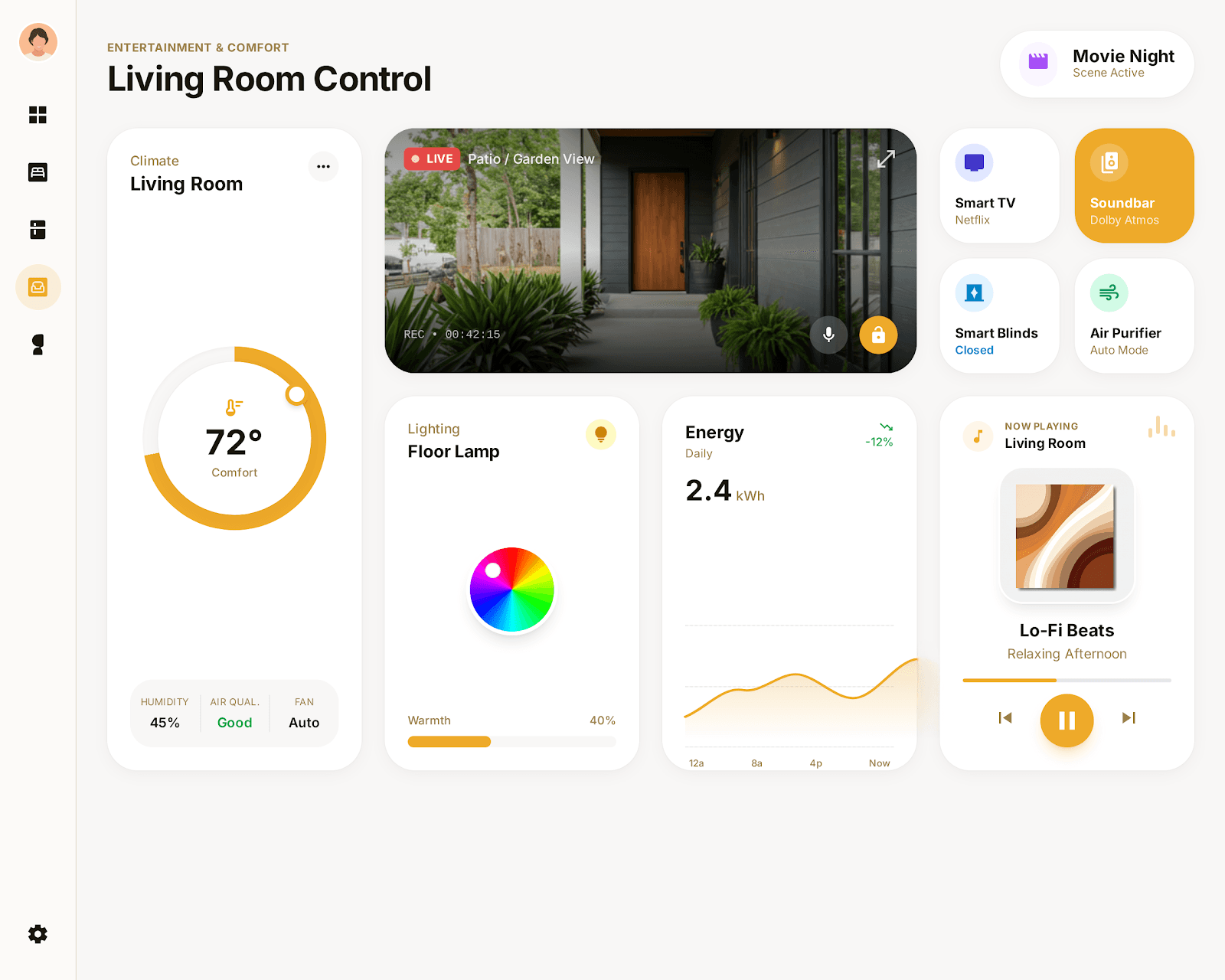
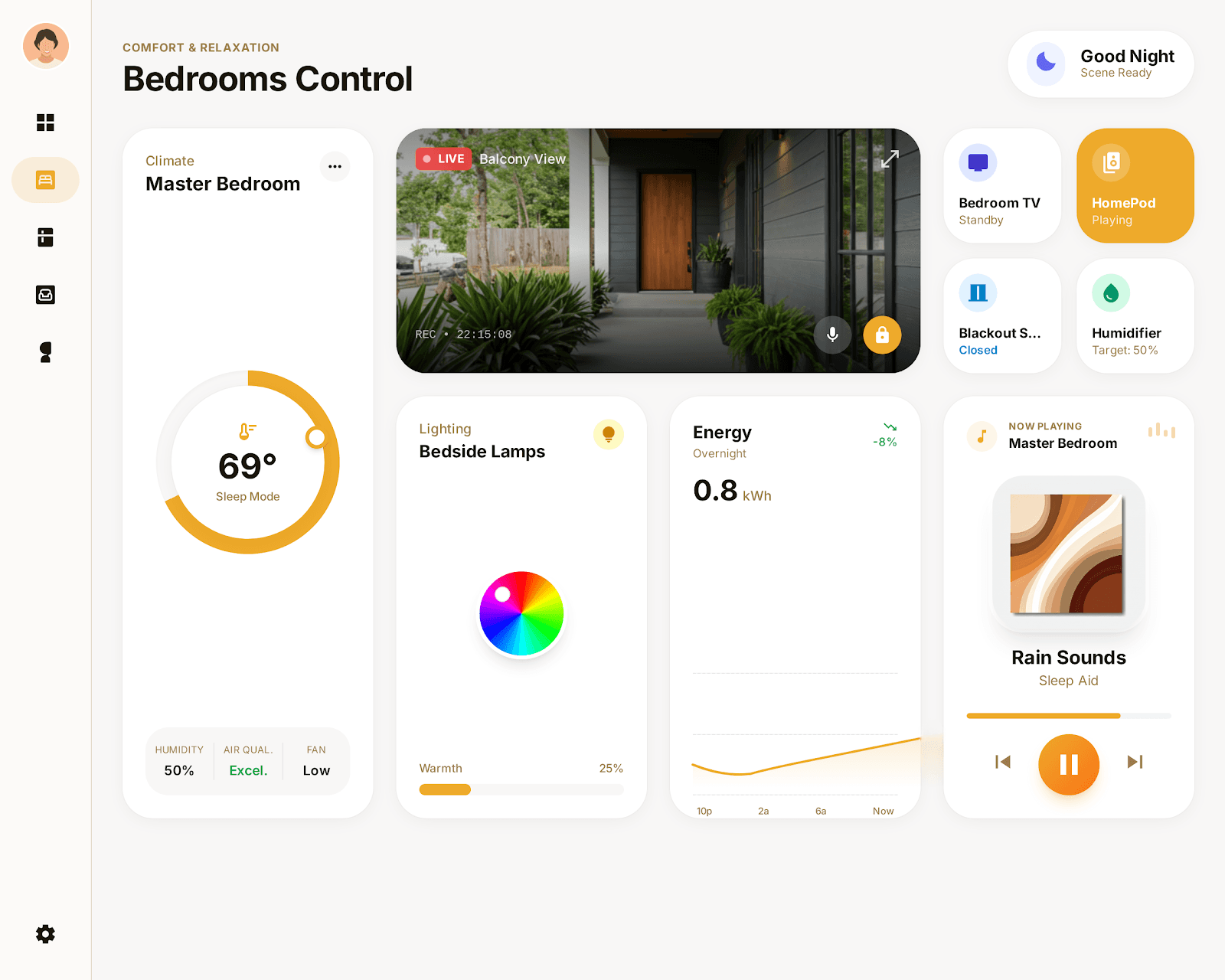
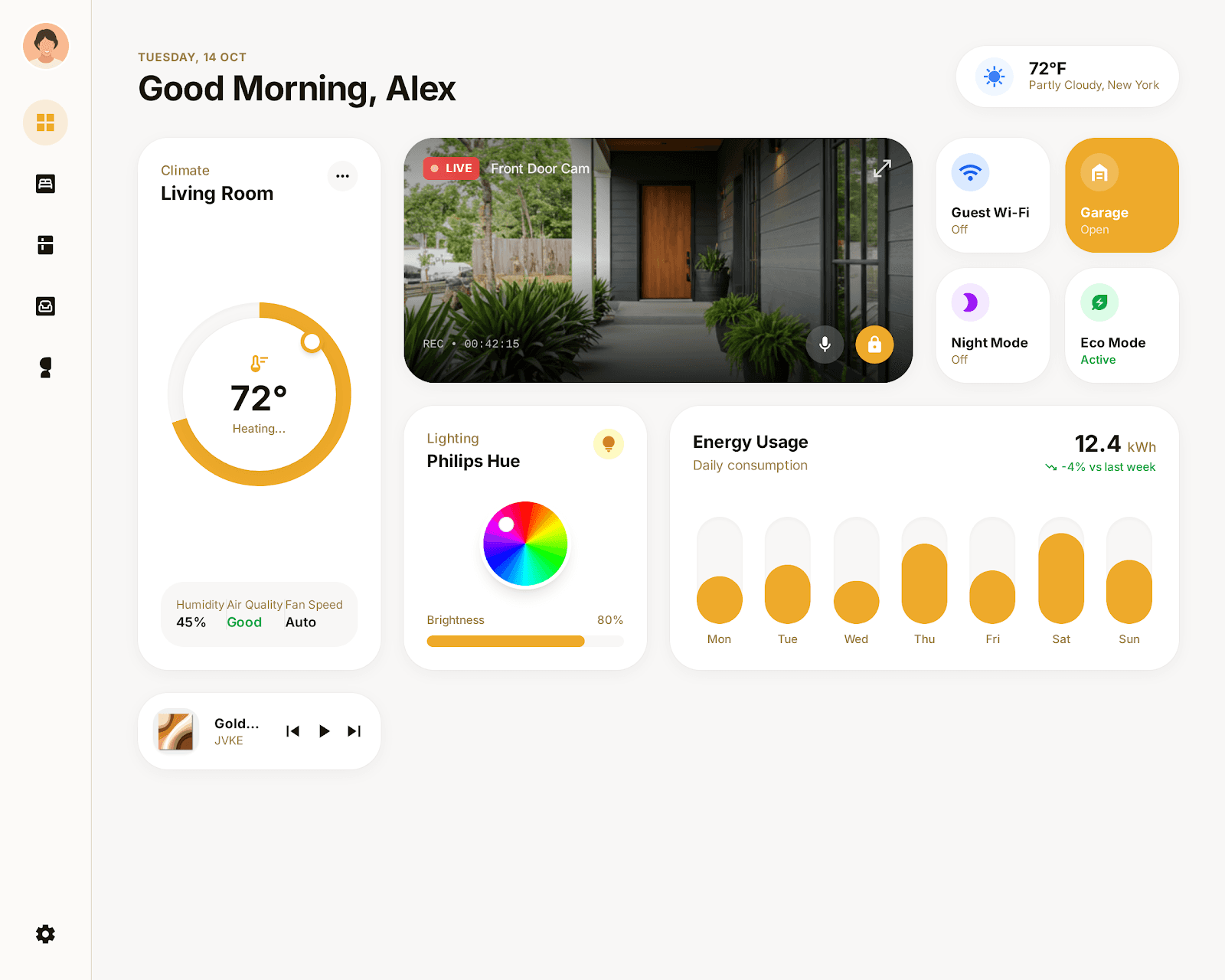
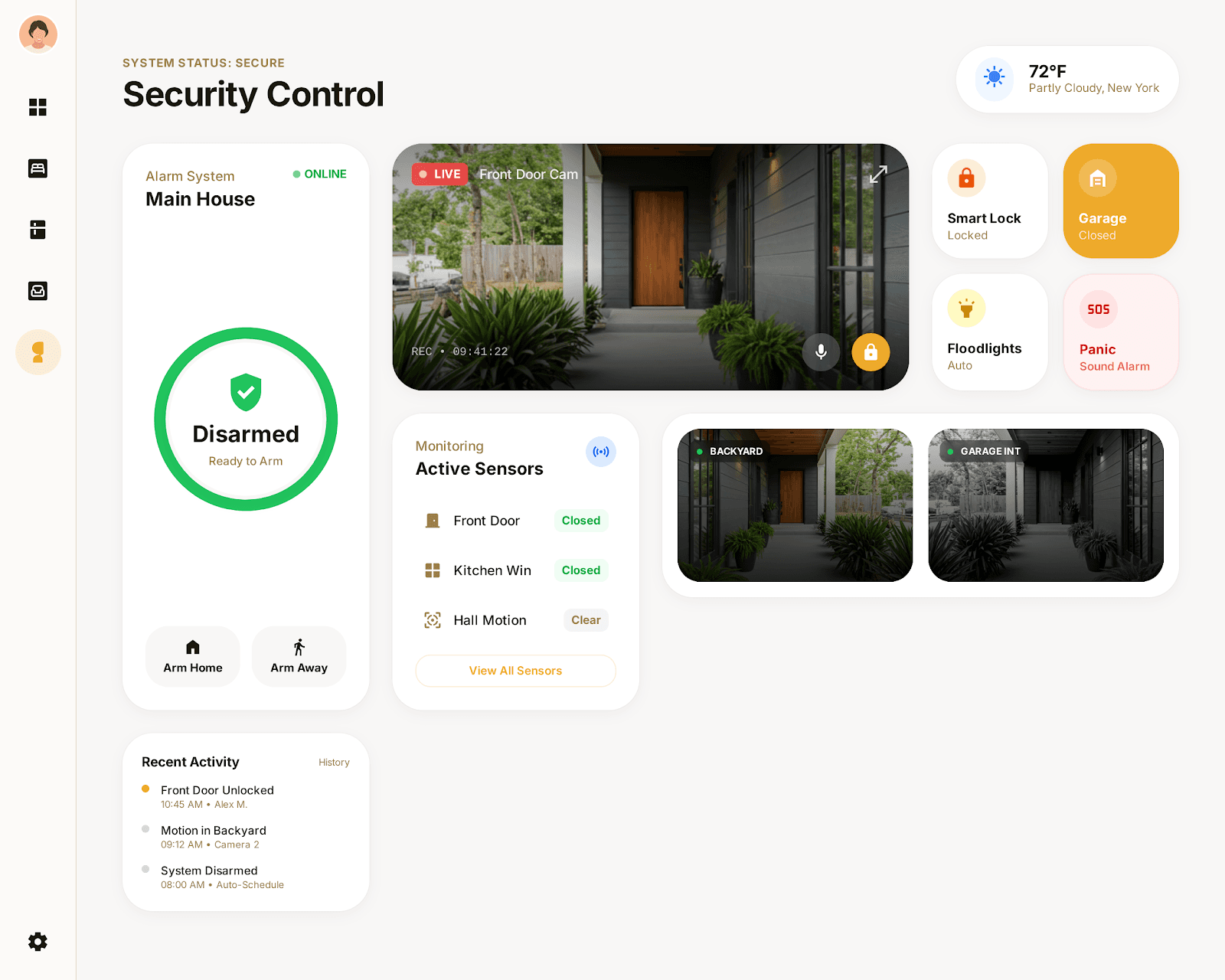
A tablet-first control surface that treats the home as a set of moods rather than a list of switches: glanceable, tactile and calm.
The Challenge
Fit dense device control into a layout that stays glanceable from across the room and works one-handed.
The Outcome
A modular scene-based system that makes complex automations feel like a single, satisfying tap.
- ✦iPad UI
- ✦Interaction specs
- ✦Scene system
Process: from device list to living room
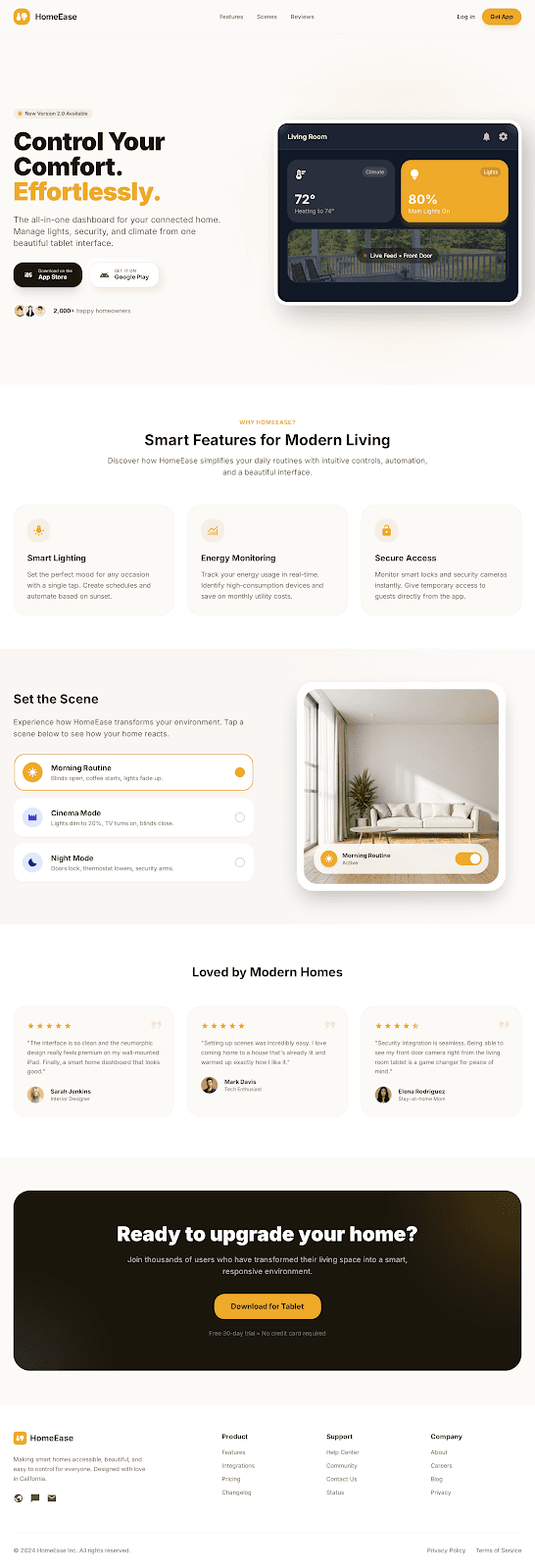
Every smart-home interface fails the same way: it inherits the plumbing. Apps organized around devices (bulbs, plugs, thermostats) force people to think like electricians in their own living rooms. This concept started from a week of informal research into how people actually talk about their homes, and nobody says 'activate the ceiling light group'; they say 'make it cozy'. That single observation became the product's architecture: scenes first, rooms second, devices last.
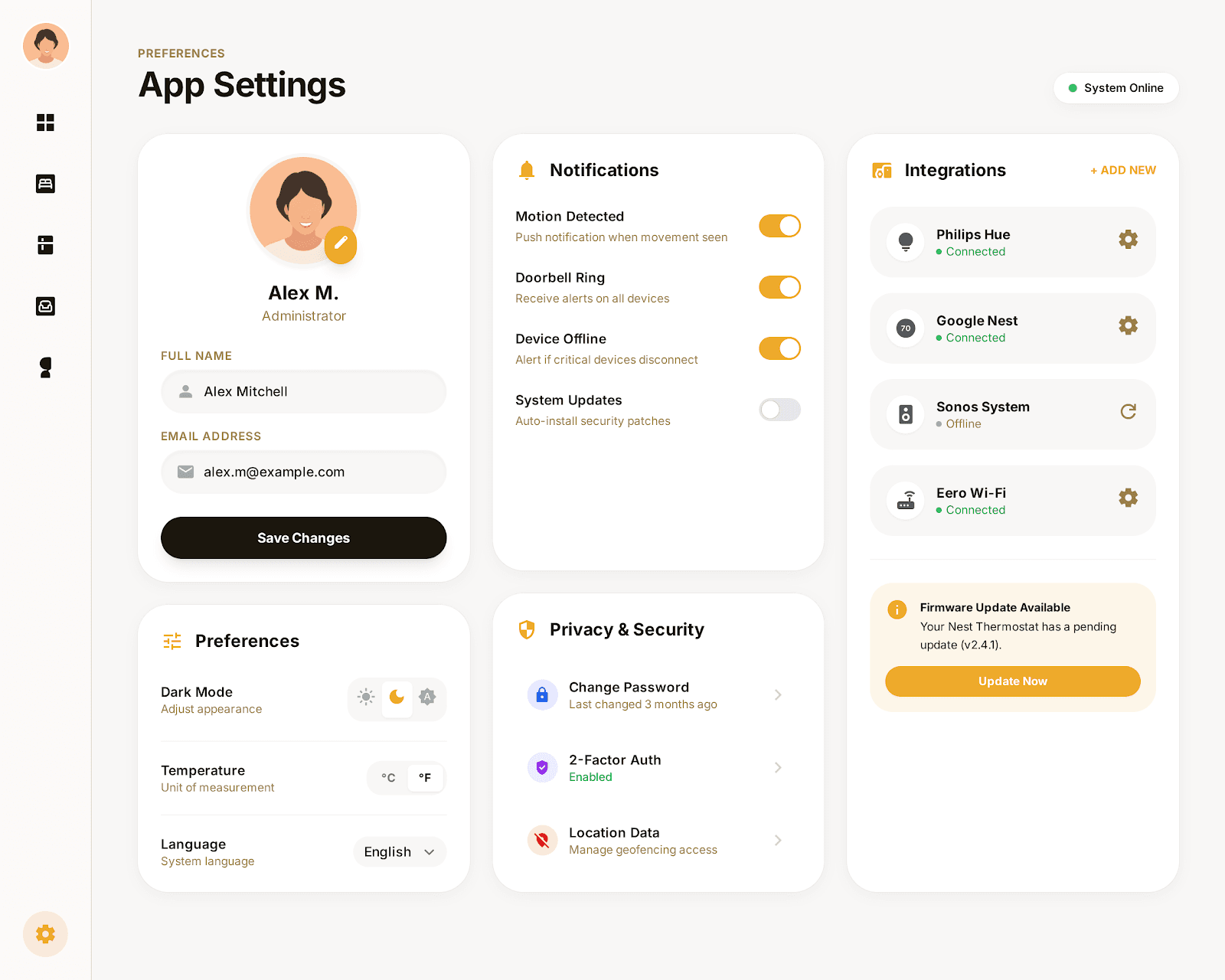
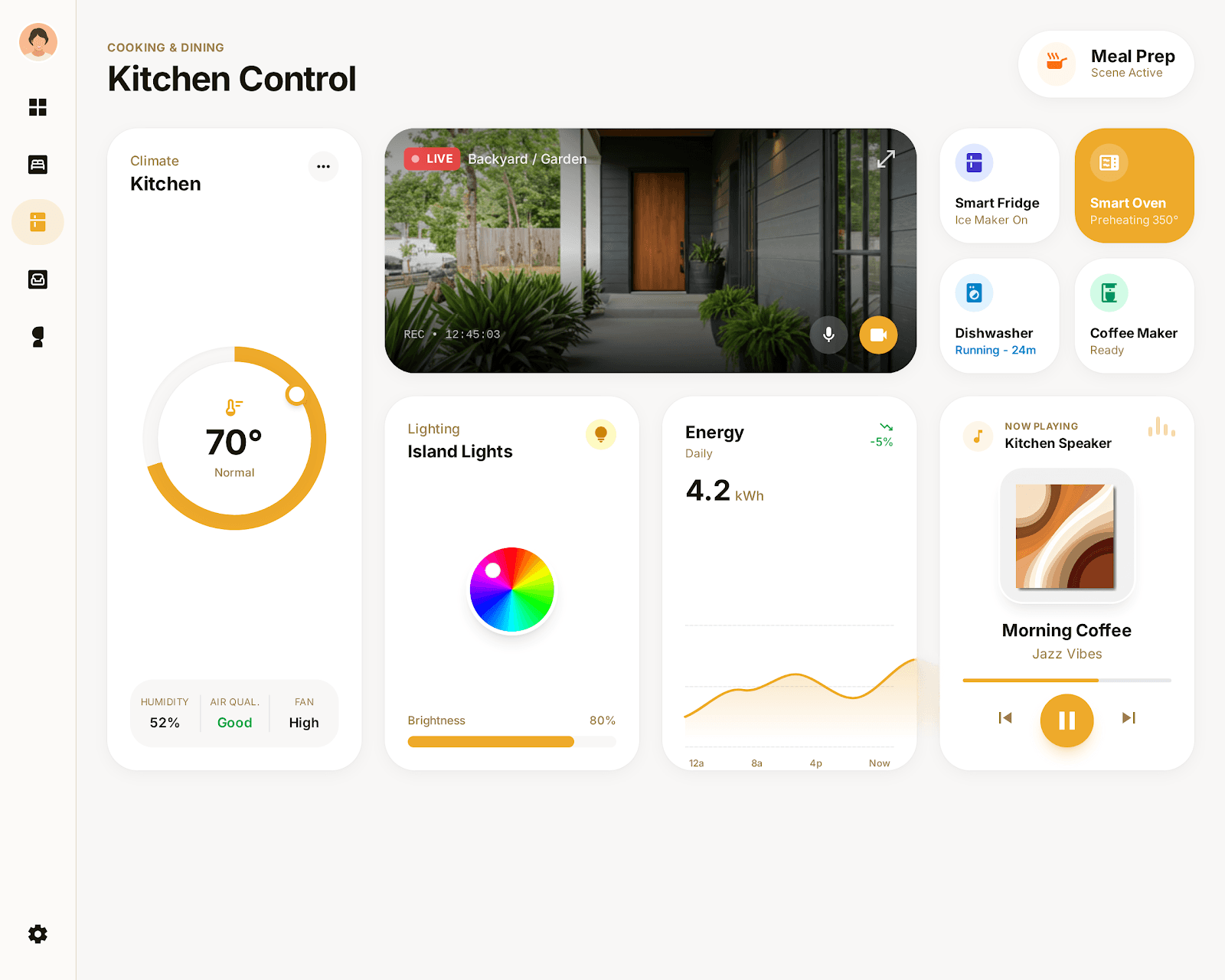
The iPad format shaped everything downstream. A tablet mounted on a wall or resting on a kitchen counter is glanced at from two metres away, so the entire type scale was tested at distance: every critical state readable from across the room, every touch target sized for a thumb in passing. Seven screens cover the full loop: overview, room detail, scene editing, energy, climate, security, and a deliberately calm night mode.
Design decisions under the hood
The hardest problem was density without noise. A home can expose forty controllable devices; showing them all is chaos, hiding them is friction. The resolution was a two-layer model. Scenes carry 90% of daily use on the surface, while a consistent long-press gesture opens granular device control anywhere. Testing the clickable prototype confirmed the split: participants set up their evening in one tap and never missed the buried complexity until they wanted it, at which point it was exactly one gesture away.
Visually, the interface borrows from ambient design rather than dashboard design: warm neutrals, generous negative space, and data visualization that behaves like room lighting, staying present, glanceable and never demanding. The energy graphs use the same soft language, turning consumption into atmosphere rather than accusation.
Where it landed
The concept shipped as a complete seven-screen system with interaction specs and a scene-based component architecture that scales from a studio flat to a multi-floor home. It has become my reference piece for spatial-interface briefs, and the scene-first information model has influenced every control-surface project I've taken since.