Every week someone tells me CGI is dead because a text prompt can make a video now. Every week I also watch a generative clip fall apart the moment a client asks for 'the same thing, but the camera lower and the logo readable'. After a year of using AI tools inside actual paid work (not demos), I've stopped arguing about whether they belong in the pipeline. They do. Just not where most people think.
What I hand to the machines
Ideation is the clearest win. Where a mood board used to take an afternoon of reference hunting, I now generate thirty rough visual directions before a kickoff call and arrive with a point of view. None of those images ship; they exist to make the conversation concrete, and clients decide faster when they're reacting to something instead of imagining it.
The second win is drudgery: roto cleanup, plate extensions, upscaling old renders for a new placement, quick style passes on storyboard frames. This is work nobody became an artist to do, and the tools are genuinely better at it than a tired human at 2 a.m. Every hour reclaimed there goes back into simulation time and lighting, the parts that actually raise the ceiling of the final image.
What stays human, and why
Art direction doesn't survive delegation. A generative model can produce a beautiful frame, but it can't want anything. It doesn't know the brand fears looking cold, or that the last campaign failed because the motion felt cheap. Intent is the product; pixels are just its evidence.
Continuity is the other wall. Client work is revision work: the same object, the same light, the same material, adjusted eleven times. A 3D scene is a contract: change one thing, everything else holds. Generative video still struggles to keep a hero product identical across shots, and 'close enough' is not a phrase brand managers use. That's why my simulations, hero renders and anything with a logo stay in Blender and Unreal Engine, end to end.
The hybrid pipeline that actually works
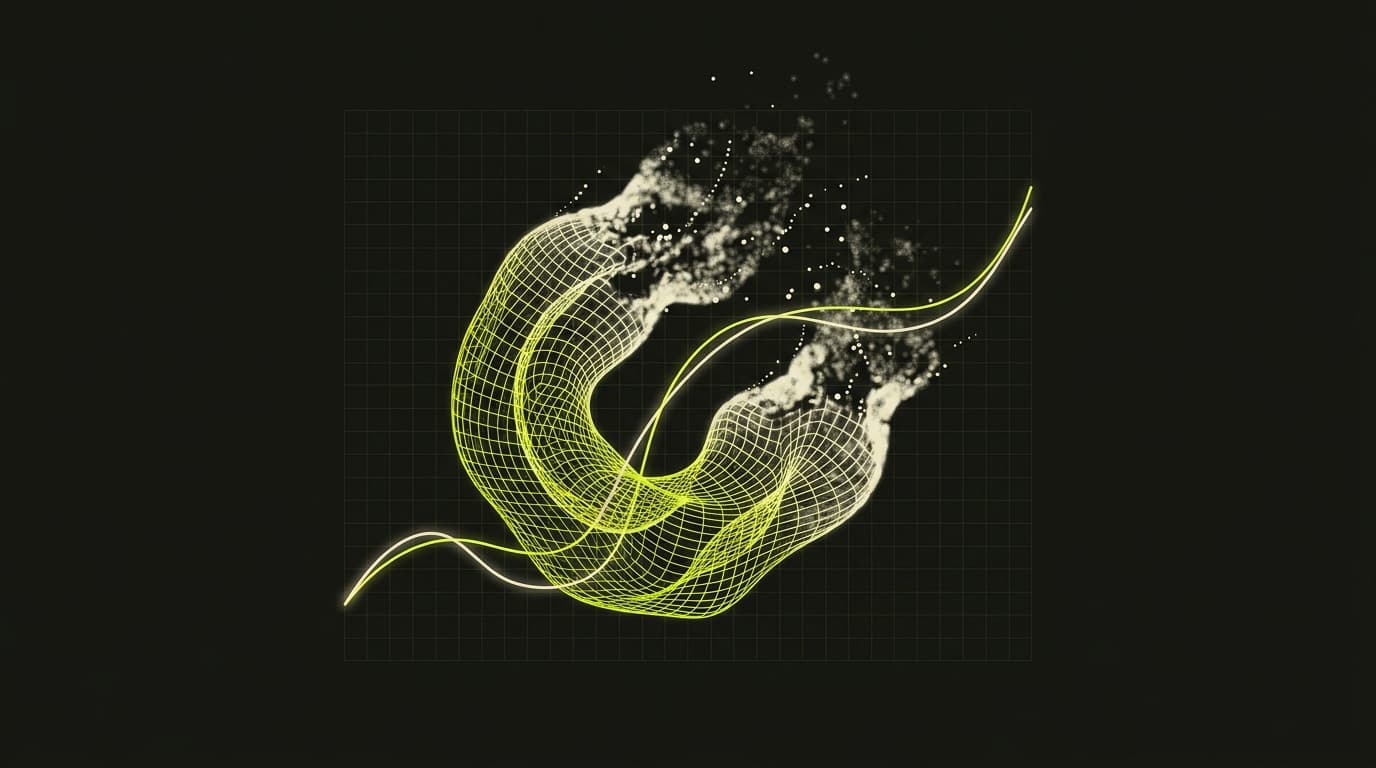
My current pipeline looks like this: AI for exploration and cleanup at the edges, traditional 3D for everything the client will approve, reject or trademark. Generated frames become lighting references, not deliverables. Generated video becomes an animatic to sell a camera move, then gets rebuilt properly. The fluid simulation work in my portfolio would have been faster to fake and impossible to revise, which is exactly the trade every working artist should be pricing in.
The artists in trouble in 2026 aren't the ones ignoring AI or the ones using it. They're the ones who let it decide. The tool is a very fast junior with no taste. Hire it accordingly.
A concrete week, tool by tool
Abstractions hide the texture of real work, so here is an actual production week from this spring. Monday: a beverage client kickoff, prepped with thirty generated mood frames sorted into three visual directions. That was ninety minutes of prompting instead of an afternoon of reference hunting, and the client picked a direction in the meeting itself. Tuesday to Thursday was traditional work, entirely: modelling the hero bottle from CAD, look-development against the chosen direction, fluid tests for the pour. The generated frames sat on a second monitor as lighting reference and were never opened in a compositor.
Friday is where the hybrid gets interesting: the client asked for a vertical cutdown concept for a format the storyboard never covered. A generated animatic (the existing renders image-prompted into a rough vertical motion test) sold the concept in one review, and the real vertical shot was scheduled for the following sprint. Total generative share of the week by hours: maybe fifteen percent. Total share of the week's client-facing decisions it accelerated: well over half.
The uncomfortable part nobody posts about
Honesty requires admitting what the tools broke. First, estimation: my quotes used to price exploration time, and now exploration is nearly free. That sounds like a win until you realize clients expect the discount but not the fact that execution still costs what it always did. I re-learned to quote in phases, with exploration explicitly cheap and production explicitly not.
Second, taste erosion is real and personal. Two months of leaning on generated ideation left my own thumbnail sketching noticeably slower. The muscle atrophies exactly as fast as it's convenient to let it. I now keep the first thirty minutes of any concept phase analog, on paper, before touching a prompt. Not from nostalgia; from the same logic as a pianist keeping scales. The tools are staying, so the discipline around them has to be designed as deliberately as any pipeline.
Digital Marketing Specialist, UI/UX designer and CGI artist in Istanbul, building viral brand campaigns where data-driven strategy meets cinematic 3D.